Sunday, 18 March 2012

How Berlin's hidden treasures make it Europe’s answer to New York!

Berlin, Berlin – so good they named it.....once!  Yes, ok, it doesn’t quite have the same ring to its name as New York, but seriously, Berlin is one of Europe’s most fabulous cities.  For me, Berlin is Europe’s equivalent of New York.  It’s got that buzz about it: there’s always something going on, the city’s landscape is a constantly changing melting pot of architectural styles and there’s the shadow of the city’s recent history, too.  Just like New York, Berlin is the kind of city that you could go back to again and again and yet see something different each time. 
So how to condense this wonderful city into just one blog post?  Well, pick out some of its many unsung highlights of course! Your first visit will be all about soaking up the atmosphere and seeing the main sights, but I can guarantee that you’ll want to go back again.  Therefore, here are just a few ideas for visits you might want to make on your second, or even third, visit to the city;
Kaffee und Kuchen at the Reichstag
OK, so the Reichstag is somewhere that you’ll definitely want to visit on your first trip to Berlin; its amazing Lord Norman Foster designed glass dome perched high on its roof was enough to make me fall in love with it on my first visit.  But if you’ve already done the Reichstag, how can you do it again and make it different?  Well, one idea is to go once in the daytime and again in the night time; I can promise you that the view will be quite different, yet equally spectacular, both times!  But another way of differentiating your trip and making is a bit different is to take Kaffee und Kuchen on the roof!  Just like a German version of high tea, you’ll be led into elegant surroundings and served elegant cake to match; there’s even gluten free cake for those who need it!  What could be more wonderful than looking out over Berlin with a slice of cake and a cup of coffee in hand?  Fabulous!
Kaffee und Kuchen in the Reichstag!

The Secret Nuclear Bunker at the Story of Berlin Museum
There’s evidence of Berlin’s recent cold war history all over the city.  You may be walking away from the totally modern Sony Centre at Potsdamer Platz when you come across a section of the Berlin Wall, or you may see one of the many mosaic murals which are a left over piece of communist history, and of course, there’s also the imposing Fernsehrturm to remind us of the hold that the Soviets had over the east of the city.  But if you want to experience the cold war from a Western Sector point of view, a visit to the Nuclear Bunker which forms part of the Story of Berlin Museum could be just the ticket.  Cold, dark, damp and rather eerie, you’ll be led down the stairs to this underground hiding place – built to house West Berliners if the city ever came under nuclear attack – and led around the complex with an English speaking guide.  Very interesting, but not somewhere you’d want to spend your whole holiday, that’s for sure!

Inside the very dark Nuclear Bunker!

Schloss Cecilienhof, Potsdam
Technically not in Berlin, and also technically not so-secret, the Cecilienhof Palace in nearby Potsdam is often overshadowed by Sans Souci Palace, also in Potsdam.  But this shouldn’t necessarily be the case; if you have the time to visit both, it’s certainly worth doing so.  Built between 1914 and 1917 and designed to look like an English Tudor country house by Paul Schultze-Naumburg, the palace was commissioned by Emperor Wilhelm II of Germany for his son, Crown Prince Wilhelm and his wife, the Duchess Cecilie of Mecklenburg-Schwerin.  The palace was the location of the Potsdam Conference between 17th July and 2nd August 1945, attended by Winston Churchill, Joseph Stalin and Harry S. Truman, whereby the terms for the Japanese surrender during World War II were issued under the Potsdam Declaration.  Yet another example of Berlin’s recent history coming to life in this interesting visit!


Schloss Cecilienhof

The Jewish Museum
Incredibly interesting, the Jewish Museum was designed by American architect, Daniel Libeskind, meaning that not only is the museum itself an informative and fascinating visit, but the architecture of the museum is also worth taking the time to appreciate.  The Museum covers two millennia of Jewish history, and the design of the museum incorporates the very moving Holocaust Tower and the Garden of Exile; certainly architecture to make you think.


The Daniel Libeskind designed Jewish Museum with its Holocaust Tower

East Side Gallery
The East Side Gallery is somewhere that you may wish to see this on your first visit to the city, admittedly, but if you don’t, be sure to see it on your second visit.  The East Side Gallery is a 1.3km long section of the Berlin Wall.  It is covered by approximately 106 paintings and works of graffiti by artists from around the world, making it the largest outside gallery in the world, and showing itself as a symbol for freedom.  A reminder therefore of the city’s past, and a hopeful look towards its future.


The East Side Gallery

It’s easy to see that Berlin is a place of great variety, history and places of interest.  The above is just a taster of the city; I’m sure that you’ll also want to experience the better known sights, such as the Brandenburg Gate, Checkpoint Charlie, the Holocaust Memorial and the Sony Centre, as well as the wonderful shopping and dining opportunities that the city has to offer.  But if you’ve got some spare time, or are back for a second visit, it’s worth checking out the city’s hidden gems – I know there’s plenty more that I need to see; better get round to booking that return trip!

Sunday, 26 February 2012

A Tale of Three Countries....

With the once-in-every-ten-year event, The Floriade horticultural exhibition, coming up in Venlo, now really is a great time to visit Holland.  But whilst there, why not sample some of the best of the countries that border the Netherlands too?  That’s exactly what I was lucky enough to do recently on a work trip to visit Holland, Belgium and Germany; a trip that really was a tale of three countries!
Our journey on the continent really began when we stopped in Ghent.  This beautiful Belgian city is often overlooked in favour of Bruges, but sitting just about an hour and a half away from Calais, it’s a great destination for a weekend break from the UK.  Similarly, its gorgeous canals and the St. Bavos Cathedral, famous for its altarpiece, The Adoration of the Mystic Lamb by Hubert van Eyck and his younger brother Jan van Eyck, make it a great place to stop on a longer journey, to stretch the legs and for a bite to eat.
Ghent
On from here, we couldn’t leave Belgium and cross into the Netherlands without sampling some Belgian chocolate.  And what better way to do this than by visiting a working Belgian chocolate factory?!  Chocolate Jacques, in Eupen, offers just that: as well as a really interesting museum and a very tempting and reasonably priced shop, visitors can also take a guided tour of the factory, which involves walking along a suspended walk way above the production line!  Very interesting -  after all, everyone loves a conveyor belt!
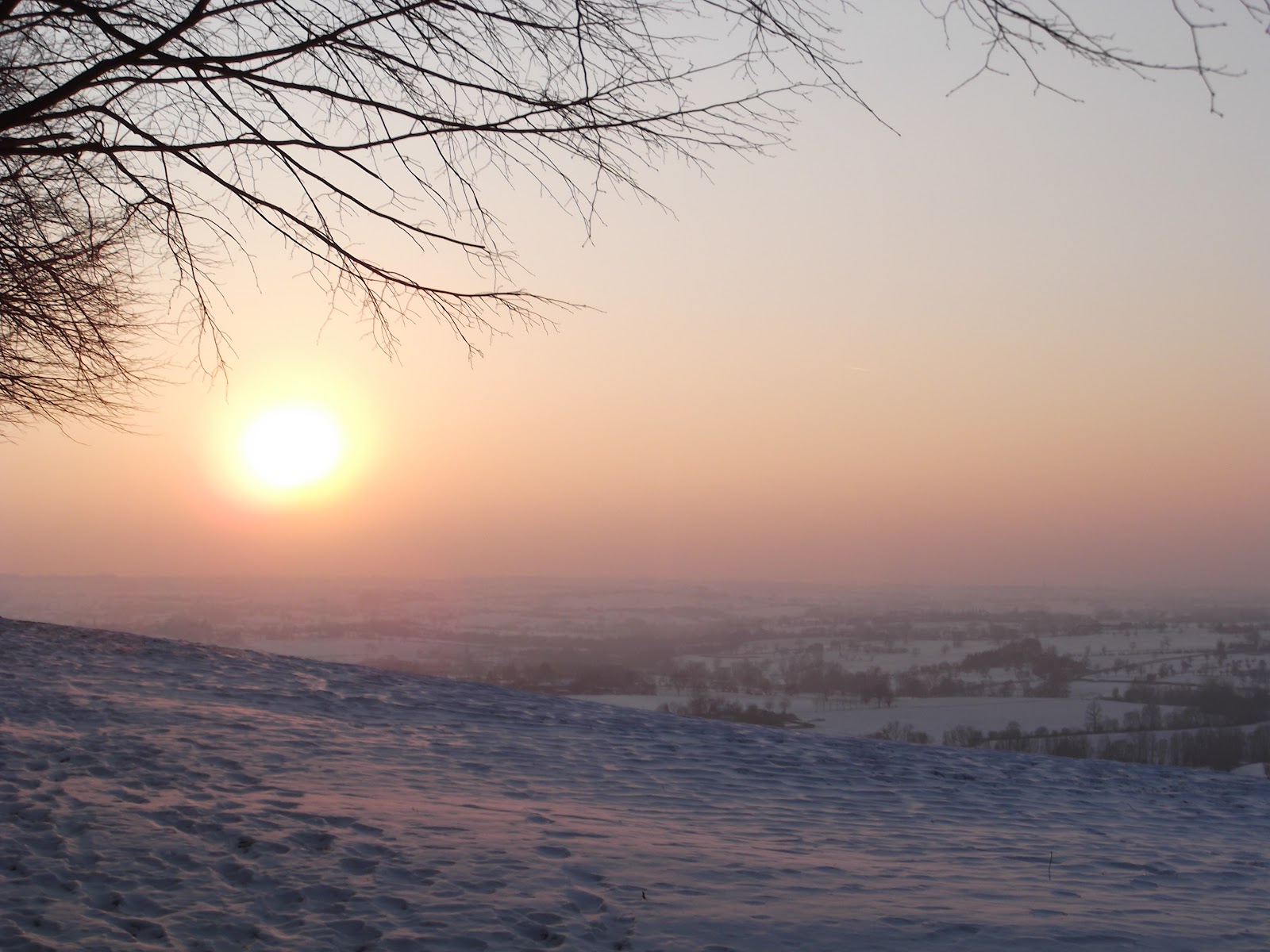
Travelling on further still to our hotel, and in complete contrast to the light hearted visit of the afternoon, quite by chance, we came across the American War Cemetery.  The sight of row upon row of unmarked graves is humbling at the best of times, but as we stopped here to pay our respects, the setting sun over the snow-covered fields lent a particularly tranquil, almost eerie, feel to the landscape as we realised that those that had fallen may have done so in the freezing cold conditions that we were experiencing, but certainly in much more horrendous circumstances, doing their duty for their country.  A sight to behold on this beautiful, if frosty, afternoon.
The American War Cemetery

Sun setting over the snow-covered fields
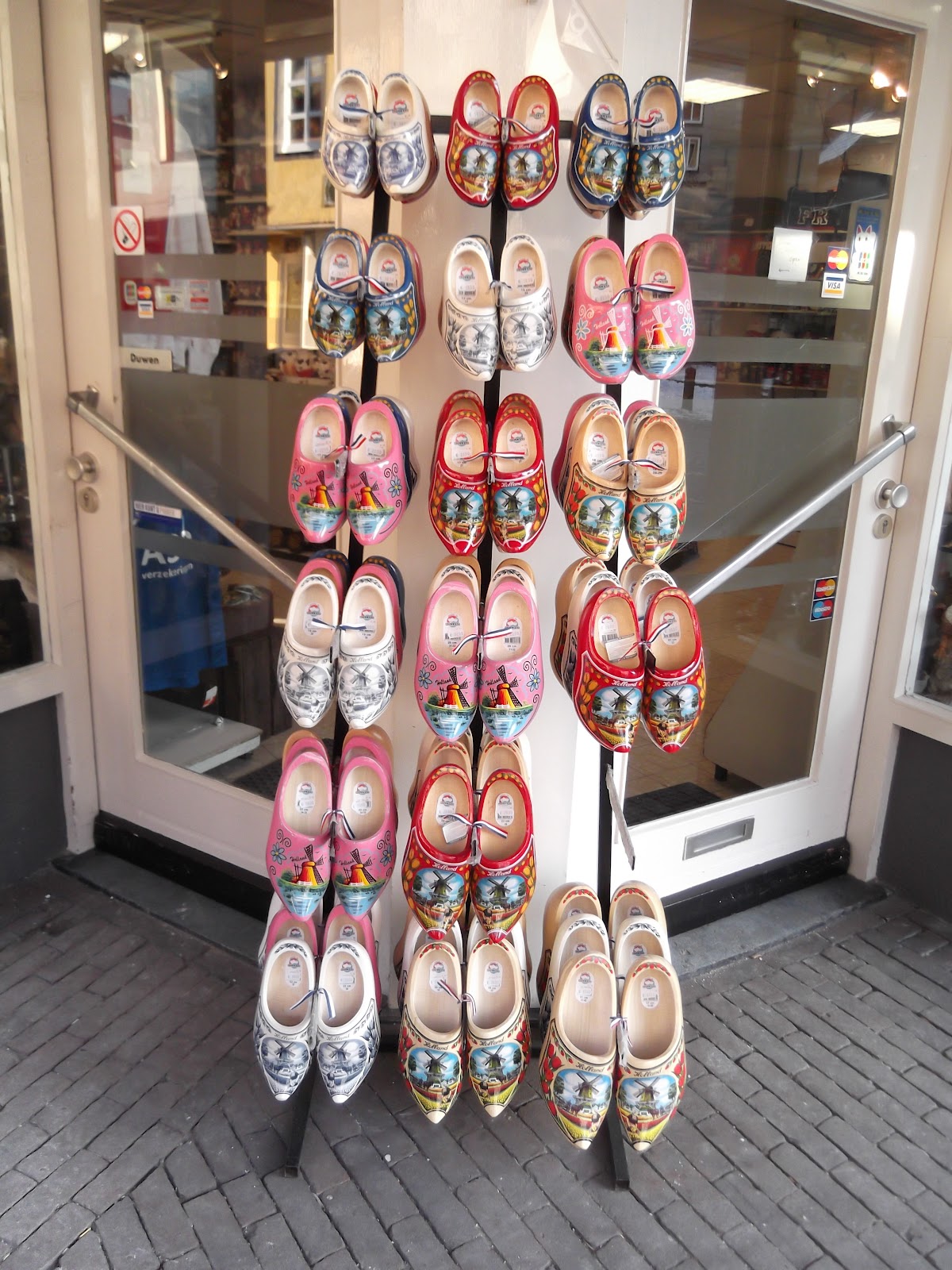
Valkenburg was to be our base for the weekend, and the next morning, we had a chance to explore this charming little Dutch town.  Situated just 13kms east of Maastricht, it has the highest number of beds and hotel space in the Netherlands outside of Amsterdam.  And it’s easy to see why: winding cobbled lanes filled with colourful restaurants and souvenir shops, whose brightly hued clogs hang outside for all to see, are enough to enchant the visitor alone.   Add to that the pretty canal twisting through the centre of the town, the castle ruins perched high on a hilltop and accessed via cable car, looking out over the inhabitants below, and the marlstone caves, and you’ve got a recipe for a great little resort town.  From here, you’re also in an excellent position to undertake ‘the tour of three countries’; having sampled some of Belgian the day before, today was to be all about Germany.
Valkenburg


Clogs!

First stop for us on the German agenda was Aachen, although Cologne is also a viable destination from Valkenburg.  The beautiful Roman Spa city of Aachen is dominated by the imposing Cathedral, and as we visited on this bright and sunny morning, it reached high into the blue skies above us.  From here, we then visited the smaller town of Brühl.  Another gem of a town, the real treasure in its crown being Schloß Augustusburg.  This Rococo masterpiece was a favourite residence of the Electors of Cologne, and as you approach the castle, it’s easy to see why: manicured gardens border a magnificent golden palace, and it’s just as beautiful inside as it is out; the castle is used for state receptions, and as we walked in the footsteps of Queen Victoria and Queen Elizabeth II, as well as many other dignitaries, up the exquisite and very impressive Balthasar Neumann staircase, it was apparent why it’s not only used for state receptions but is also on the UNESCO World Heritage List.
A very cold me at Schloss Augustusburg!

On our last day we briefly took in some more of the Netherlands with a quick visit to Maastricht (if only these work trips allowed more time in places!) before taking in more still of Belgium.  We firstly visited the Caves of Remouchamps, which were first opened to the public in 1912. The tour here today consists not only of a walk through the pre-historic caves, but also a boat trip which glides mysteriously over the underground river.  The town of Remouchamps itself has almost an Alpine feel, and is a great place to stop for a coffee and Belgian waffle!
Our last visit of the trip was to be to the Gardens of Annevoie; although snow covered during our visit, it was easy to see their attraction.  The water gardens offered us a peaceful stop at the end of a busy trip – what better way to unwind before the long drive back to Calais?!
The Gardens of Annevoie

The Belgian Ardennes and their surrounding countryside are an often overlooked part of the continent, but there’s no reason why this should be the case.  With a base as appealing as Valkenburg to explore Holland from, and both Germany and Belgium nearby, a driving holiday here really is a great way to explore the hidden gems of Northern Europe!

Sunday, 15 January 2012

How to buy hats for lambs; AKA, how to be Brits abroad!


“Reims?  Rouen? Rabastens?  Anyone else got any ideas?”.  As we trudge welly-booted through the French countryside, our brains are most definitely being put through their paces, trying to decipher the cryptic clues that make up the traditional New Year’s Day treasure hunt.  There’s certainly no better way to blow out the cobwebs, nor is there a more effective way to work off last night’s canapés and Champagne, than walking through the French countryside with the crisp, cool air and, if we’re lucky, brilliant sunshine of the Tarn Valley on our faces.  As my family and I are fortunate enough to have visited my Aunt and Uncle in this part of France for the last five or so years, we’ve come to realise that this not-so-well-known French Department really is a hidden treasure, and somewhere where us Brits can still show ourselves to be stereotypical Brits abroad at times, whether we want to or not!

A countryside view of Salvagnac

This was not more evident than in the ordering of the meat for our New Years Eve meal.  Off we go to the boucherie, full of confidence in our school-days’ French, and proceed to order our lamb cutlets.  The butcher goes out back, returns and seemingly finds our order understandable and, in rapid-fire French, tells us to see the girl at the end of the counter.  Off we go, we repeat our order to the girl, who again seems to understand and writes down what we want.  We leave the butchers, proud of our language skills, and suddenly realise our mistake.  The hats!  We’ve forgotten to order the paper hats for the lamb!  So we return to the butchers and ask, “Avez vous les chapeaux pour L’agneau?” – and it soon becomes quite clear that everyone in the butchers, be they staff or shoppers alike, are wondering who these two mad English women are that buy hats for their sheep!  After much shrugging, gesticulating and more rapid French later, we discover the correct French word for those pesky paper hats which are causing us so much trouble, embarrassment, and ultimately laughter: Papillote!
And then there is the visit to the vineyard.  We pull up and climb out of our cars, only to find that the shop, attached to the vintner’s house, is empty.  So we wait.  And we wait, and we wait, and we wait, all the while trying to translate the magazine article on the wall about said vintner: “the secret to wine production lies in patience.”  It seems that the secret in buying wine also lies in patience!  In our rather British way, we decide that rather than potentially disturbing the owner by knocking on his front door and using yet more embarrassing ‘Frenglish’, we’d rather make a lot of noise and hope that he hears us.  So we proceed to pull one of the cars into the gravel drive of the house and execute a 10-point turn.  “If we’re going to do this properly, we should at least do a wheel-spin and a wheelie!”, my husband exclaims, but fortunately, neither is needed as the vintner at last hears us and comes out of the house and crosses to the shop to serve us.

A vineyard view

But aside from immersing oneself in the local life of this region, there is much to offer the visitor: from art and architecture in Albi, to culture in Castres, and gastronomy in Gaillac, not to mention the local vineyards, antiques shops, food markets and countryside walks. 
Castres
And anyway, isn’t it more fun to give it a go and try your hand at the local language?  Who cares if you get it wrong?  Travelling is all about experiencing new cultures and there’s no better way of doing that than by getting involved.  After all, we did eventually get our wine, and even our hats for the lamb – although I can just imagine the stories being relayed around various French dinner tables that evening of the mad English women who put hats on their sheep!

Thursday, 22 December 2011

A real Christmas Cracker: the hidden heart of Germany

Over the last few years, the European idea of the Christmas Market seems to have captured the imagination of the British public.  And yet some of their most beautiful markets, those in the Thüringen region of Germany, are often overlooked.  This wonderful hidden heart of Germany really does have much to offer the visitor, and particularly at Christmas time.

I was lucky enough to recently stay in Erfurt, which is an excellent base for exploring this region.  The Medieval old town centre is easily discovered on foot, but there’s also a great network of trams, busses and trains to other nearby towns if needed too.  In the run up to Christmas, Erfurt boasts a beautiful traditional Christmas market which is one of the largest in Germany, receiving approximately two million visitors a year.  Situated in Domplatz at the heart of the old town, the market is overlooked by the majestic St. Mary’s Cathedral and is stunningly illuminated of a night time, with a traditional big wheel affording great views over the lit-up market.  Traditional crafts and decorations are on offer, as are Bratwurst sausages, Langos fried bread and Heiße Maroni – or as we know them, roasted chestnuts!  What better way than to while away a sociable evening with a Glühwein or two around a blazing fire pit?!
The Erfurt Christmas Market awaits us!


The Cathedral looks down over the market


A spectacular view from the big wheel

Nearby Eisenach, which can claim Bach and Martin Luther among its famous past inhabitants, also has a lovely Christmas market.  Although smaller than that of Erfurt, the market has a wonderfully cosy atmosphere, and after a day spent exploring the cultural delights of the newly-extended Bach House, Martin Luther’s House or the Richard Wagner collection at the Reuter-Wagner Museum, it’s an excellent place to meet and relax with friends.  From Eisenach, it’s also just a ten-minute drive up to the stunning Wartburg Castle.  Perched high above the town, this UNESCO World Heritage Site is a beautifully preserved Castle dating back to 1068, and was once the home of St. Elisabeth of Hungary!  As well as being a wonderfully interesting place to visit, during the advent weeks it’s also home to a gorgeous little Medieval Christmas market.  Here you’ll be able to buy traditional fruit wines, sample some great German baking and listen to medieval musicians!
The Eisenach Christmas Market


Wartburg Castle

Traditional market stall holders at Wartburg Castle

Apart from the wonderful Christmas markets in Thüringen, this region of Germany is also famous for glass blowing and blown-glass Christmas ornaments.  We were lucky enough to visit two glass producing concerns in Lauscha, a small town within the Thüringen forest: one was a large glass blowing factory, manufacturing everything from vases through to wine glasses, and the other was a small family run shop which specialised solely in beautiful Christmas ornaments and had been in the family for six generations of glass blowers.  We even got the chance to have a go at making our own baubles, and proudly toted our (slightly-wonky!) decorations home with us!
Proudly showing off my Christmas bauble!

Thüringen really is such an interesting, beautiful part of Germany and is slightly off the beaten track, too.  Having said that, it’s easily reached with Lufthansa flights directly from London Heathrow, Manchester and Dublin to Frankfurt, and is then just a train journey away.  Whether visiting during the run up to Christmas, or at any other time of the year, there really is something to please everyone, from Bratwursts to Bauhaus!  Put Thüringen, the hidden heart of Germany, at the top of your Christmas list next year!

Greet the hidden gems of New York City: your personal tour of the Big Apple

In April 2011, my (then very new) husband and I were lucky enough to visit New York City for the very first time.  The Big Apple was somewhere that both of us had wanted to visit for as long as we could remember, and what better time to take our first trip than on our honeymoon?!
When you mention to anyone that’s already been to New York that you’re going, you get a deluge of ideas for sightseeing, eating, viewing and enjoying.  While our friends and family all came up with various great suggestions, the one that stuck in our mind the most was applying for a Big Apple Greeter.  In Britain, this is a service which is unfortunately not so well known, which is a shame as it’s something completely different to the rest of the offerings available to tourists.  Friends of ours had used the service some years prior to our visit, and they couldn’t rate it highly enough. 
So what are the Big Apple Greeters all about, I hear you ask?  As their website, www.bigapplegreeter.org, states, with a Big Apple Greeter you see New York through the eyes of a New Yorker.  A volunteer service since 1992, native New Yorkers act as a tour guide of the city, showing visitors their neighbourhoods and giving them an insight into places they might not otherwise have found.  The tours are also ‘private’ in the sense that there is one guide per couple or small group that apply – no struggling to hear the tour guide above the rabble of a huge group!  Therefore, as our friends spoke so enthusiastically about the service, we decided to apply for a Greeter for our first trip to the city.
Unfortunately, the amount of Greeters is outstripped by the demand (which in itself shows how popular it is!).  We wouldn’t know if we’d received our Greeter until we got to our hotel, and so it was with much excitement that we read the fax waiting for us upon our arrival in our hotel’s reception.  We had our Greeter!
On the morning of the 19th April 2011 we met with our Greeter, Clyde, in our hotel lobby.  Most Greeter tours are scheduled for the first couple of days of your trip, and with good reason: it’s a good way to orientate oneself, and Clyde also showed us how to use the Subway system on our trip over to his native Brooklyn.  For this we were most grateful, as it gave us the confidence and understanding to use the Subway to get about town for the rest of our trip.
Clyde showed us around Brooklyn Heights, and explained the different types of houses in the neighbourhood.  We also took in the magnificent Manhattan skyline for the first time from the promenade, a sight truly to behold!  Unfortunately, the skies were overcast and there was a light drizzle in the air, but this didn’t dampen our spirits as Clyde steered us to an umbrella shop and we continued on with the tour! 
Our first view of the famous NY skyline, umbrellas in hand!!
We saw some more of Brooklyn and also popped into a visitors’ centre before jumping back on the Subway to Manhattan.  Here we visited the trendy Meat Packing District and walked up to Washington Square Park, with delights such as the Magnolia Bakery, featured in Sex and the City, along the way.  As well as hearing the history of such sites first hand from a native New Yorker, it was really nice to exchange pleasantries and discuss the similarities and differences between the USA and UK with one of our friends from across the pond!
At the end of the tour, Clyde kindly pointed us in the right direction of a bus to take us to the New York Public Library and Grand Central Station; although we had always planned on visiting Grand Central Station, we may not have come across the New York Public Library and its grand interior without our Greeter’s help.  This was the end of our fantastic 3-hour tour – what a way to see parts of New York which are off the beaten track! 
Sadly, as the Big Apple Greeters is a not for profit organisation, it relies on public donations.  At the end of our tour, we were more than happy to send a donation to the organisation, and we hope that other visitors to the Big Apple that are lucky enough to use their services are also in a position to help them out.  Anyone that is fortunate enough to receive a Big Apple Greeter can guarantee that they will have one of the most interesting tours they could wish for, and all for nothing.  I hope that the organisation will be able to provide Greeters to other visitors of the city for many years to come.